
A Charitable Benefit for Pender County Historical Society & Museum
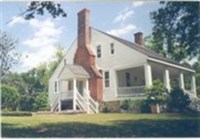
Sloop Point Plantation House, built in 1726, is among the rarest colonial buildings not only in the Cape Fear region, but in the entire state of North Carolina. Built 50 years before the Battle of Moores Creek and the Declaration of Independence, this year is the 300th anniversary of this ancient and beautifully graceful home. It is the 2nd oldest standing structure in the state. The private home has not been opened to the public since 2007.
The event offers two public entrance times, with the advance purchase of tickets, at noon and 1:00 p.m. Features of the event include:
- A tour of the inside and cellar of the historic home.
- A 40-minute informative program about the times and the house at 12:30 p.m. and 1:30 p.m. in the barn by co-presenters author/historian UNCW Professor Emeritus Dr. Chris E. Fonvielle, and Michael Y. Taylor, Vice-President of Pender County Historical Society.
- Historical Society of Topsail Island - about the necessity of manufacturing salt during the Civil War during the Union blockade of imports to the southern coast and the salt works at Sloop Point.
- NC Maritime Museum at Southport & Brunswick Town State Historic Site – about colonial indigo dye production in the lower Cape Fear. The desired blue dye was exported to England. Learn how it was produced and see a vat of the dye made from the indigo plant, indigenous to our region.
- The Pender County 1865 Society – about “The Other Residents of Sloop Point and Enslavement.” The story and contributions of the enslaved will be remembered and honored.
- Moores Creek National Battlefield – about 18th century musketry with firing demonstrations.
- TBA special guests – about the daring and successful 1863 Union raid on Sloop Point to destroy a blockade running schooner and the salt works guarded by Confederate troops.
Sloop Point dates to the same year that Brunswick Town was founded, before Wilmington, after the English Lord Proprietors decided to finally issue land grants, opening up European settlement on the Cape Fear region. The house was built on the edge of a vast wilderness at a time when even the indigent Native American population was largely absent.
The home was built by John Baptista Ashe (1695-1734), born in England, who was engaged in sloop and schooner construction at Bath when he married into the prestigious and powerful Swann family. This was his first of many land grants of thousands of acres in the Cape Fear region. At that time, Virginia Creek and Topsail Inlet had formed a deep-water small harbor in that area of Topsail Sound, which made it attractive for sloop or schooner, navigation.
Ashe’s two sons became prominent patriots agitating for independence from Britain in the years leading to the Revolution. During the war, they were leading military officers. His daughter married James Moore, who became the Continental Army Brigadier General commanding the Moores Creek Campaign against the Loyalists. Receiving acclaim, he then commanded all the Patriot forces of the state, before appointment over all the forces of the southern colonies shortly before his death.
The architecture of the house is influenced by that in the West Indies islands which quickly evolved out of necessity to resist hurricane force winds. It rests on a raised foundation of original brick and ballast stones creating a walk-in cellar convenient for storing precious commodities for household use.
Since the circa 1760 expansion, the appearance of Sloop Point House has been little changed. Among the unique or interesting features of the house are:
- Most prominent, a unique side entrance through the middle of a massive chimney into a small vestibule in the middle. Two entrances from there for rooms on either side to adjoining rooms where fireplaces are located. Visitors will be able to experience walking through the passage.
- Handsome original Georgian-style paneling around several fireplaces, original longleaf pine flooring, doors, and brick hearths.
- Wooden ductwork in the ceiling of the broad porch could be opened to carry the sea breeze to the second story.
- Unique staircase featuring unusual balustrades between the railing and the steps.
The home was in the Ashe family for three generations, later serving as a second home on the coastal sound from their primary plantation residences on the Cape Fear and Northeast Cape Fear rivers. Sloop Point was once a working plantation reliant on the labor of the enslaved who will also be remembered at the event.
Other families followed the Ashes and the Whitfield-MacMillan family owned the plantation for 157 years from 1825 to 1982 before it was subdivided and sold.
Because the number of tickets available for sale are restricted, purchase in advance to ensure admittance. This is a charitable benefit event for Pender County Museum, a non-profit institution operated solely by Pender County Historical Society.
Tickets: $75 incl. sales tax. Rain or shine event; no refunds.
PURCHASE TICKETS, LOCATION ADDRESS, AND OTHER INFORMATION AVAILABLE THROUGH ANY OF THE FOLLOWING:
- In an internet browser enter these words in a search field: sloop point zeffy
- Through Face Book page: Pender County Museum
- Through these web addresses:
https://www.zeffy.com/en-US/ticketing/sloop-point-house-tour