
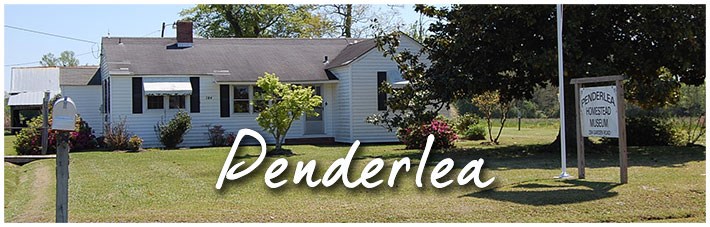
Penderlea is a unique agricultural community established in 1934 by the US Department of the Interior. It was the first of 152 subsistence resettlement projects under Franklin D. Roosevelt’s New Deal. Known as a “farm city,” the Penderlea community is laid out in a horseshoe fashion around a central community center that included an auditorium, gymnasium and teacherage. Radiating from the community center were small, 20-acre farms that were believed to be sufficient enough to provide homesteaders subsistence and cash income to then purchase the homesteads under a lend/lease agreement by the government. Each homestead featured a two or three bedroom house with running water, barn, poultry house, hog house and washhouse.
Though the project was designed to provide modern homes and land to penniless, young farmers, that was not it’s only purpose. The homestead projects employed thousands of out of workmen in the Civilian Conservation Core, another one of Roosevelt’s recovery measures. Mrs. Eleanor Roosevelt made a personal visit to Penderlea in 1937 in efforts to boost nationwide enthusiasm for her husband’s New Deal proposals. She encouraged the young farmers and their families to take advantage of the opportunity to own their own land.
Today, you can visit the Penderlea Homestead Museum, housed in one of the first homes built on the project. The original school at the heart of the community’s center remains today and is considered one of the best in the county. Three hard-surface roads connect Penderlea to the surrounding towns of Wallace, Burgaw, and Watha where railway stations once awaited shipment of produce from this unique agricultural community.
Visit www.penderleahomesteadmuseum.org to find out about ongoing efforts to preserve the history of Penderlea.